The Project
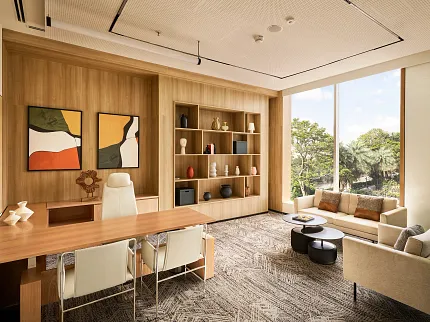
M Moser's design idea for the project has positively impacted people and the planet through a well-thought-out design that aligns with the "People Together Planet Forever" ambitions.
Material Health
Low VOC Materials: The use of water-based, low VOC paints improves indoor air quality, reducing health risks associated with volatile organic compounds.
FSC Certified Wood: Using Forest Stewardship Council certified wood ensures that the materials are sourced from responsibly managed forests, promoting sustainable forestry practices.
Circular Economy
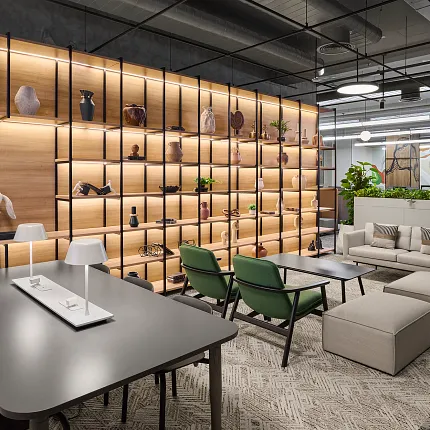
Recycled Construction Waste: The practice of taking construction waste to municipal waste areas for recycling helps in reducing landfill use and promotes the recycling of materials.
Wet & Dry Waste Management: Although this practice is post-construction, the provision of bins for different types of waste supports effective waste segregation and recycling.
Carbon Impact
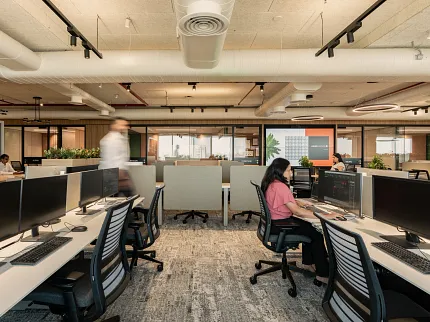
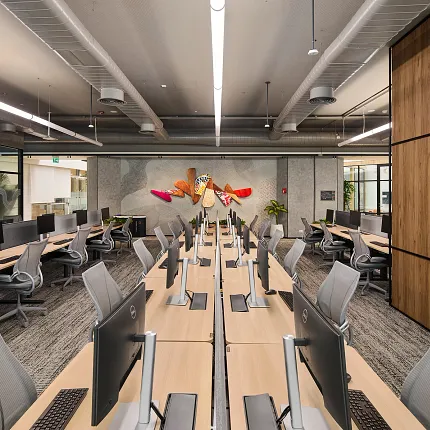
Energy Efficient Systems: The implementation of energy-efficient air conditioners, lighting systems, and the use of occupancy-based lighting management systems help in reducing energy consumption and the carbon footprint of the building.
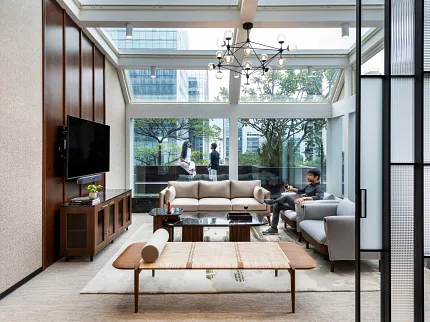
Maximizing Daylight Use: Although daylight sensors were removed, maximizing daylight reduces the need for artificial lighting, thereby lowering energy usage.
Diversity, Equity & Inclusion
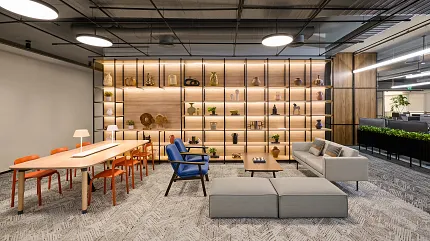
People-Centric Design: The design intent to create spaces that reflect local culture and connect people aims to foster a sense of community and inclusivity.
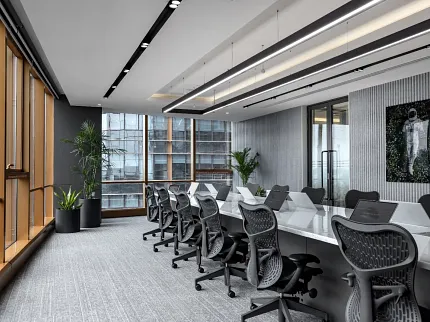
Accessibility Features: Although not all suggested features (e.g., infant changing tables, hands-free bathroom exits) were implemented, the consideration of ergonomic chairs and adjustable desks for principal and cabin desks supports workplace diversity and inclusion by catering to various physical needs.
Material Health
Low VOC Materials and FSC Certified Wood: These choices directly contribute to the Material Health ambition by ensuring the use of non-toxic and sustainably sourced materials.
Circular Economy
Recycled Construction Waste and Waste Management: The project’s approach to managing construction waste and post-construction waste segregation supports the Circular Economy ambition by promoting recycling and reducing landfill waste.
Carbon Impact
Energy Efficiency Measures: The installation of energy-efficient HVAC systems, lighting, and the use of daylighting strategies, although modified, significantly contribute to reducing the project's carbon footprint.
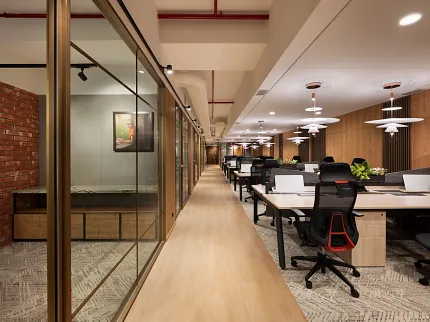
LED Lighting: The use of all LED light fixtures and ensuring their flicker-free operation with high color rendering index (CRI) values also contribute to lower energy consumption and better lighting quality.
Diversity, Equity & Inclusion
Ergonomic and Inclusive Design: The provision of ergonomic chairs and height-adjustable desks in principal and cabin areas supports diverse user needs, contributing to a more inclusive workspace.
Cultural Connectivity: The project’s design intent to create spaces that resonate with local culture and foster connections among people aligns with the ambition to promote Diversity, Equity & Inclusion.