The Project
The project, evolving from a design studio to a Living Lab in Mumbai, has positively impacted both people and the planet through innovative design and thoughtful consideration of material health, circular economy, carbon impact, and diversity, equity, and inclusion.
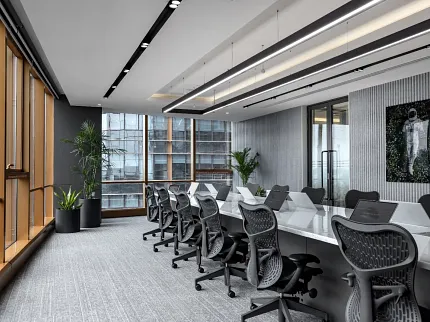
This Living Lab serves as a prototype for cutting-edge IoT technology seamlessly integrated with an ergonomic, choice-based seating and sustainable workplace.
Our core focus areas include:
1. Indoor Air Quality (IAQ)
Design Intent: Prioritize clean and healthy air within the workspace.
Impact: Utilizes advanced air filtration systems and plants to improve air quality, reducing pollutants and allergens, thereby enhancing occupant health and productivity.
Material Health: Selects materials that do not emit harmful VOCs, ensuring a safer environment.
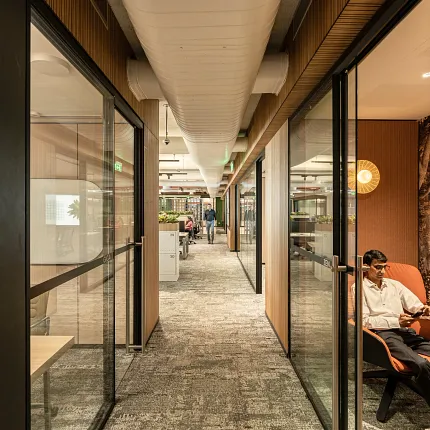
2. Acoustics
Design Intent: Create a serene and productive environment by managing noise levels.
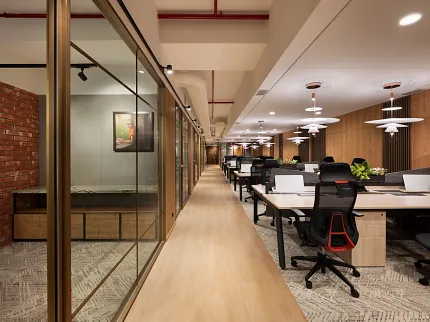
Impact: Incorporates sound-absorbing materials and strategic layout planning to minimize noise pollution, improving concentration and reducing stress for employees.
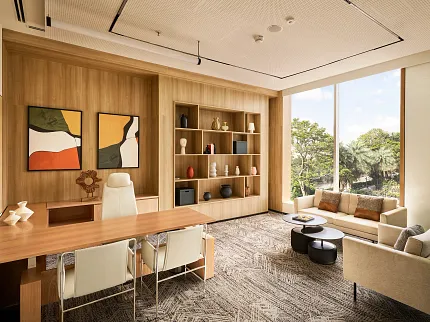
Diversity, Equity & Inclusion: Designs inclusive spaces that cater to different work styles and needs, ensuring equitable access to quiet and collaborative areas.
3. Biophilic Design
Design Intent: Integrate nature into the workspace to enhance wellbeing.
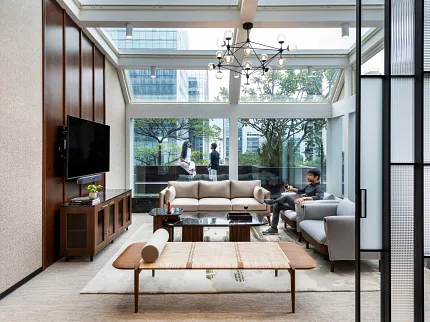
Impact: Features natural elements such as green walls, indoor gardens, and natural lighting to boost mood, creativity, and overall mental health.
Circular Economy: Uses sustainable, recyclable, and renewable materials in biophilic elements, promoting resource efficiency and waste reduction.
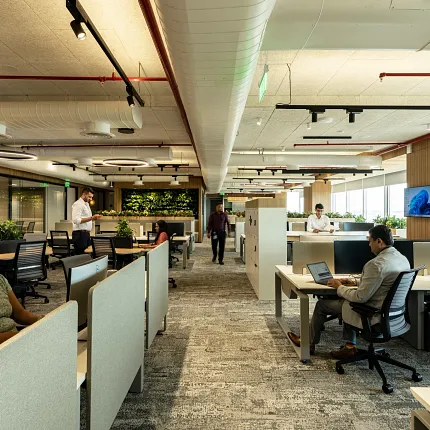
4. Thermal Comfort
Design Intent: Ensure a comfortable temperature for all occupants.
Impact: Implements smart HVAC systems that optimize temperature and humidity, adapting to personal preferences and weather conditions, enhancing comfort and productivity.
Carbon Impact: Employs energy-efficient climate control systems to reduce carbon footprint, supporting environmental sustainability goals.
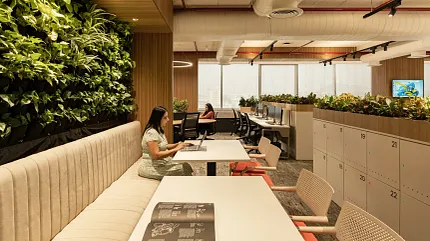
5. Physical Wellbeing
Design Intent: Promote a healthy and active lifestyle among employees.
Impact: Provides ergonomic furniture, standing desks, and spaces for physical activities, reducing the risk of work-related injuries and encouraging movement throughout the day.
Material Health: Chooses non-toxic, sustainable materials for furniture and office equipment, ensuring a safe and healthy environment.
By addressing these fundamental areas, the Mumbai Living Lab exemplifies a holistic approach to workplace design that benefits both people and the planet.